Why Stretching After a Standing Shift Is Different From After Sitting
Quick Answer: Sitting all day shortens the hip flexors and hamstrings and leaves the glutes underused, so a desk-worker routine focuses on hip extension and thoracic rotation. Standing all day loads the calves, feet and lower back and leaves the tissue congested rather than shortened, so a standing-shift routine focuses on elevation, calf and foot work, and gentle spinal decompression. Using the desk routine after a standing shift is the most common mismatch, and it is why it does not help.
Two people finish work stiff. One sat for nine hours; the other stood for nine. They do the same twenty-minute stretch routine off the same app and one of them feels considerably better and the other does not.
That is not individual variation. The two jobs produce almost opposite problems.
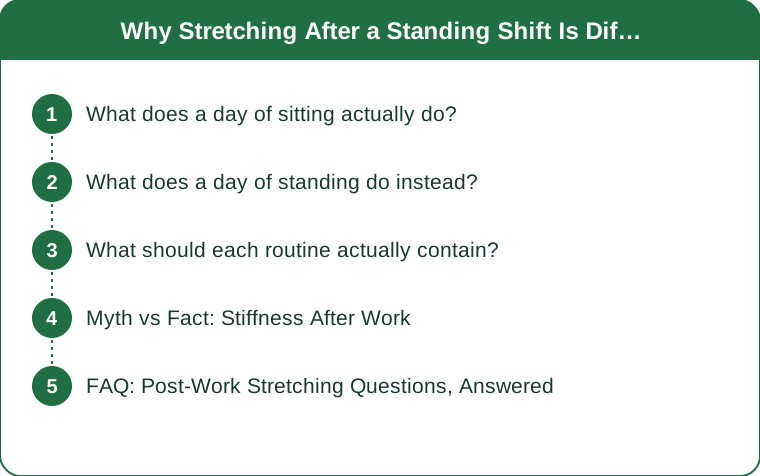
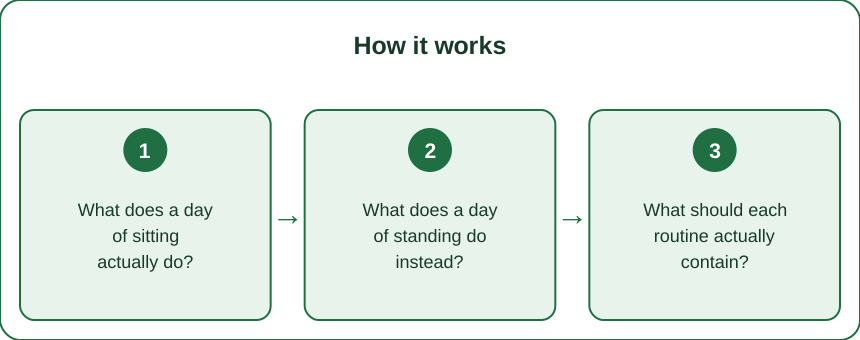
What does a day of sitting actually do?
It holds several muscle groups in a shortened position and leaves others switched off.
The hip flexors sit shortened for hours. Seated, the hip is at roughly ninety degrees, which places the iliopsoas and rectus femoris in a shortened position. Held there long enough, the tissue adapts — the sensation of tightness when you finally stand is largely a neural protective response rather than a structural change, but it is real either way.
The hamstrings are shortened at the hip and slack at the knee, in a combination that produces the classic feeling of being unable to bend forward at the end of the day.
The glutes do nothing for hours, and there is reasonable evidence that prolonged sitting reduces their activation in the movements immediately afterwards. This is why standing up after a long meeting and going straight into anything demanding feels wrong.
The thoracic spine loses rotation and extension, held in flexion by a chair and a screen.
The tissue itself is not congested. This is the key contrast with standing. Sitting does cause some pooling in the lower legs, but the dominant problem is positional shortening and disuse, not fluid.
What follows: the useful routine after sitting is one that opens hip extension, restores thoracic rotation, and wakes the glutes up. Hip flexor stretches, thoracic rotations, glute bridges, and walking. Movement is more useful than holding.
What does a day of standing do instead?
Almost the reverse, and it is a load and circulation problem rather than a position problem.
The calves work continuously. Standing is not passive — the postural muscles of the lower leg are making constant small adjustments for the entire shift. By the end of a nine-hour day they are genuinely fatigued in a way a desk worker’s are not.
Fluid pools in the lower legs. Extended standing without much walking produces measurable swelling in the feet and ankles, because the calf muscle pump that normally returns venous blood upward is working less than it does when walking. This is why shoes feel tight at the end of a shift and why the feeling is one of heaviness rather than tightness.
The feet take sustained compressive load on a hard surface, and the small muscles of the foot fatigue. The plantar fascia is loaded the whole time.
The lower back is compressed and often extended, particularly for anyone who stands with a slight sway or who leans on a counter. This is a very different back complaint from the flexed, achy back of a desk worker.
The hip flexors are not shortened at all — the hip has been extended all day.
What follows: the useful routine after standing is elevation, calf and foot work, and gentle decompression of the spine. Doing a hip flexor stretch routine after a standing shift is aimed at a problem that is not there, which is exactly why so many retail, hospitality and healthcare workers conclude stretching does not work for them.

What should each routine actually contain?
After a day of sitting — 10 minutes, movement-led:
Walk for five minutes first, before anything else. This does more than any stretch. Half-kneeling hip flexor stretch, 45 seconds each side, with a gentle posterior pelvic tilt rather than a big lunge. Thoracic rotation, seated or on all fours, ten each side. Glute bridges, two sets of fifteen, slow, squeezing at the top. Standing hamstring stretch, moderate, 30 seconds each side. Finish standing, not on the floor.
After a standing shift — 10 minutes, elevation-led:
Legs up the wall, five minutes. This is the single most effective item on either list for a standing worker, and it directly addresses the fluid pooling that is the actual complaint. Calf stretch against a wall, both straight-knee and bent-knee, 45 seconds each — the bent-knee version reaches the soleus, which is the muscle doing most of the standing work and the one people skip. Foot rolling on a ball, 60 seconds each foot, firm but not painful. Toe and ankle mobility — spread the toes, draw the alphabet with the ankle. Gentle knees-to-chest or a supported child’s pose for the lower back. Nothing that extends the back further. Finish lying down, not standing.
The one thing both need: the movement they did not get. Sitting workers need to walk. Standing workers need to stop bearing weight. Everything else is refinement.
Myth vs Fact: Stiffness After Work
Myth: Stiffness means the muscle is short. Fact: The sensation of tightness correlates poorly with actual muscle length. Much of what you feel at the end of a work day is protective tone and sensory, not structural, which is why five minutes of walking often resolves what twenty minutes of stretching does not.
Myth: Compression socks are only for flights. Fact: For anyone standing a long shift they are one of the better-evidenced interventions for the leg heaviness and swelling, and a lot of nurses, hospitality staff and hairdressers wear them routinely. Worth trying before concluding your legs are just like that.
Myth: Standing desks solve the sitting problem. Fact: They swap one problem for the other. Standing all day at a desk produces the standing-shift picture — calves, feet and lower back — and the research on standing desks is much more favorable for alternating than for standing continuously. Every thirty to sixty minutes is the usual recommendation.
Myth: Stretching before bed will fix it either way. Fact: It helps sleep for many people, which is a genuine benefit, and it does not address the specific loading of the day if the content is wrong. What you stretch matters more than when.
FAQ: Post-Work Stretching Questions, Answered
What if my job is both — standing shifts some days, desk other days?
Run both routines and pick by the day rather than by habit. Ninety seconds of thinking about which kind of day it was is the whole skill here.
How long should I hold a stretch?
For general flexibility, 30 to 60 seconds per position is the usual range and longer holds show diminishing returns. For the post-work stiffness described here, frequency and movement matter more than duration.
Does legs-up-the-wall actually do anything, or is it just a nice photograph?
For a standing worker, genuinely yes. Elevating the legs above the heart assists venous return and reduces the pooling that causes the heaviness. It is the least effortful item on either list and the one with the most direct mechanism.
My feet hurt in the morning, not the evening. What is that?
Morning foot pain at the heel, worst on the first steps, is the classic presentation of plantar fasciitis and is common in people who stand for work. It responds well to calf and foot work but is worth getting looked at rather than self-treating for months.
This is general information, not medical advice. Persistent pain, numbness, or swelling in one leg only is worth seeing a doctor about.
TL;DR:
- Sitting shortens hip flexors and hamstrings and switches the glutes off; standing fatigues calves and feet and pools fluid in the legs.
- The desk-worker routine aimed at hip flexors does very little for a standing shift, because nothing there is shortened.
- After sitting: walk first, then hip extension, thoracic rotation and glute work, finishing standing.
- After standing: legs up the wall, calf work with both a straight and a bent knee, foot rolling, finishing lying down.
- What you need most is the movement your day did not include.
If you have been doing a stretch routine after work for months and it has never quite helped, check which of these two days you actually had. It is usually a mismatch, not a failure.
Keep Reading
This article is for general informational and styling purposes only. Fit, sizing, and product availability may vary.