The 10-Minute Flexibility Routine for Desk Workers
Quick Answer: Ten minutes daily targeting hips, chest/shoulders, and spine/neck — in that order — undoes most of what a desk job does to your body. Open the hips first for the fastest relief, then shoulders, then spine.
A day at a desk leaves its mark: tight hips, a stiff neck, hunched shoulders, and a lower back that aches for no obvious reason. The fix isn’t an hour of yoga — it’s ten focused minutes that target exactly what sitting tightens. Do this routine daily and you’ll feel the difference in how freely you move.

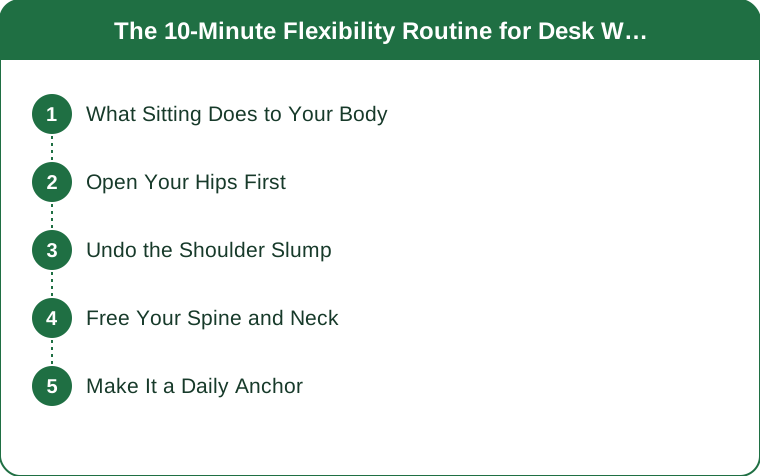
What does sitting all day actually do to your body?
Hours of sitting shortens your hip flexors, rounds your shoulders, and lets your glutes switch off from disuse. Over time, this becomes your default posture — even standing up, your body defaults to the shape it held for eight hours. Targeted stretching reverses the specific damage sitting does, rather than just generally “working out.”

Where should you start — hips, shoulders, or neck?
Hips, every time. Hip flexor lunges and figure-four stretches release the front of your hips, the area sitting tightens most aggressively. Loose hips ease lower-back tension almost immediately, since tight hip flexors tug on the pelvis and strain the lower back all day long. Start here for the single biggest payoff in your ten minutes.

How do you undo hours of hunching over a keyboard?
Chest-opening stretches and shoulder rolls counteract the forward hunch of typing all day. Opening the chest lets you stand tall again almost instantly — your neck and upper back will feel noticeably lighter within a couple of minutes. A few slow shoulder rolls, arms wide, chest lifted: that’s the whole move.
What’s the fastest way to relieve a stiff neck and mid-back?
Gentle spinal twists and slow neck stretches restore rotation and ease the tension that builds between your shoulder blades. Move slowly and breathe through each one — these small moves undo hours of stillness in a couple of minutes, and rushing through them defeats the purpose.
5 Mistakes Everyone Makes With Desk-Job Stretching
- Skipping hips and going straight to the neck. Hips give the fastest relief — start there.
- Doing it once a week “when I remember.” Ten minutes daily beats an hour once a week, every time.
- Rushing through spinal twists. Slow and controlled is what actually restores rotation; fast reps barely register.
- Ignoring the glutes. Sitting switches them off — a few activation moves alongside stretching helps them wake back up.
- Waiting until pain shows up to stretch. Prevention is far easier than undoing months of accumulated stiffness.
Myth vs. Fact: Desk-Job Flexibility
Myth: You need a full workout to counteract a day of sitting. Fact: Ten focused minutes targeting hips, chest, and spine addresses the specific damage sitting does far more directly than an unrelated general workout.
Myth: Stretching once you already feel stiff is enough. Fact: Prevention through daily stretching is far easier than reversing months of accumulated tightness — waiting for pain means starting from a deeper deficit.
Myth: Standing desks alone solve desk-related stiffness. Fact: Standing still all day can create its own tension patterns — targeted stretching still matters regardless of sitting or standing.
FAQ
What’s the single best stretch for desk workers?
A hip flexor lunge — it targets the area sitting tightens most and often eases lower-back discomfort within the same session.
Can 10 minutes of daily stretching really undo a full day of sitting?
Not entirely, but it meaningfully offsets it. Consistency matters more than any single session — daily practice prevents the stiffness from compounding day over day.
When should desk-related stiffness be checked by a professional?
If pain is sharp, radiates down a limb, or doesn’t ease with a few weeks of consistent stretching, that’s worth a visit to a physical therapist or doctor rather than continuing to self-treat.
Can a standing desk replace the need for this routine?
Not entirely — standing all day creates its own stiffness patterns in different areas, so the same hip, shoulder, and spine routine still helps even if you’ve switched to standing for part of your day.
Do desk-job stretches help with tension headaches too?
Often yes — since neck and shoulder tension from sitting commonly contributes to tension headaches, the same chest-opening and neck-stretching moves in this routine frequently ease headache frequency as a side benefit.
TL;DR:
- Start with hips — biggest payoff for lower-back tension
- Move to chest and shoulders to undo the typing hunch
- Finish with slow spinal twists and neck stretches
- Do it daily, not weekly — consistency beats duration
- Sharp or radiating pain warrants a professional check-in
Desk life doesn’t have to leave you stiff and achy. Ten targeted minutes a day — opening your hips, chest, and spine — is enough to undo what sitting does. Make it a daily anchor and freedom of movement becomes your new normal.
Keep Reading
This article is for general informational and styling purposes only. Fit, sizing, and product availability may vary.