Why You Feel Less Flexible the Moment the Weather Turns
Quick Answer: Cooler weather reduces tissue temperature, which directly reduces muscle extensibility — cold tissue is genuinely stiffer, not just perceived as stiffer. Add reduced daily movement, more time sitting indoors, and warmer clothing restricting range, and the same stretch that felt easy in August feels short in October. The fix is raising tissue temperature before stretching rather than stretching harder or longer.
The first properly cool morning of the season, you sit down to stretch and everything is two inches shorter than it was last week.
You did not lose flexibility in seven days. Muscle length adaptations do not work that fast in either direction.
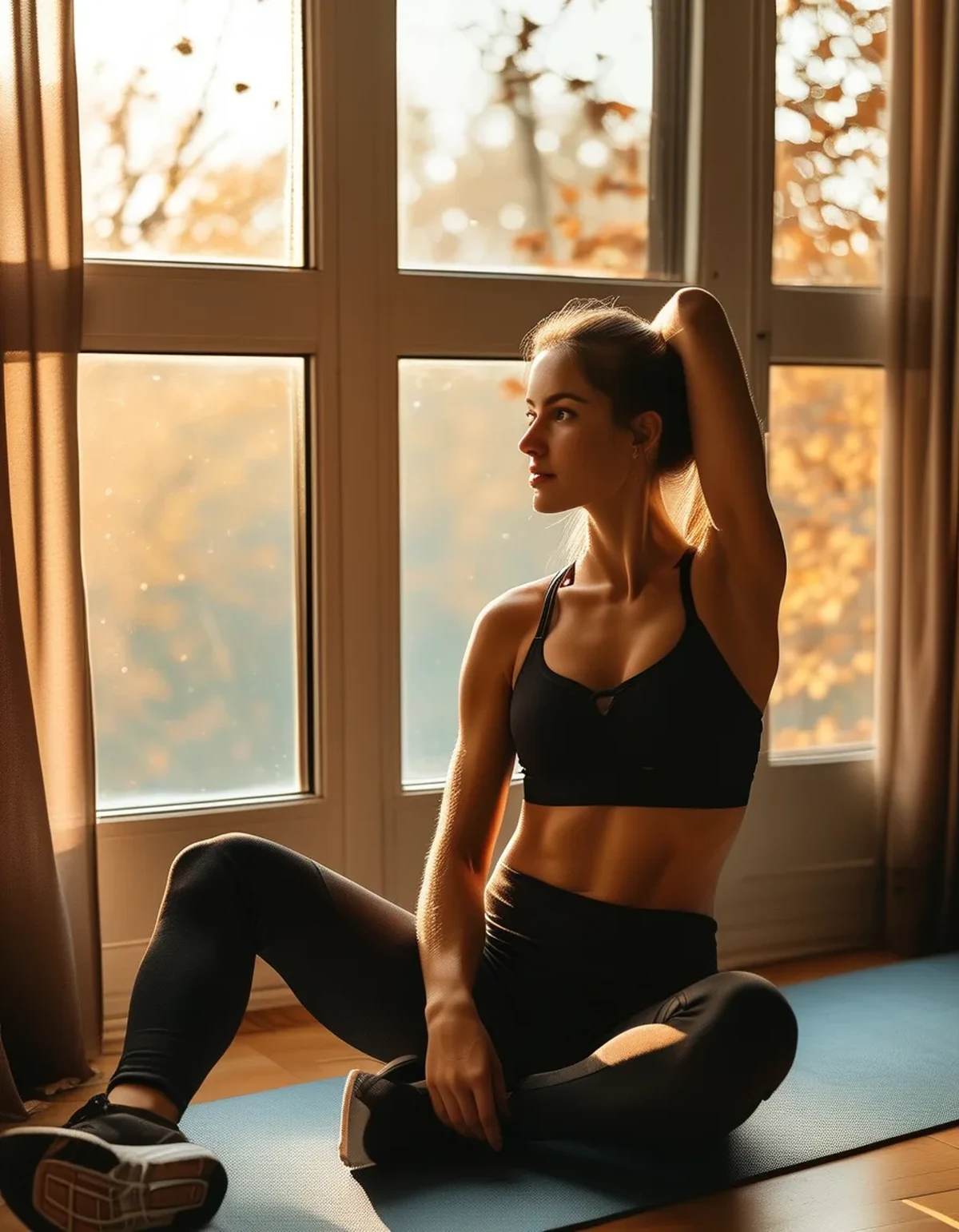
Does cold actually reduce flexibility, or does it just feel that way?
It actually does, and the mechanism is well understood.
Muscle and connective tissue are viscoelastic, which means their mechanical behavior depends on temperature. Warmer tissue deforms more readily under the same force. Cooler tissue resists more. This is not perception — the same stretch applied to the same muscle produces less range at a lower tissue temperature.
Two things drop your tissue temperature in autumn:
Ambient temperature. A 62°F bedroom versus a 76°F one changes skin and superficial muscle temperature meaningfully, particularly in the extremities and particularly after eight hours lying still.
Reduced blood flow to the periphery. In cooler conditions the body preferentially conserves core temperature by reducing peripheral circulation. Less blood flow means cooler tissue in exactly the places you are trying to stretch — calves, hamstrings, hip flexors, shoulders.
This is also why the effect is worst in the morning. You have been still for hours, in a room that is now cooler than it was two months ago, with reduced circulation to the limbs. Morning stiffness is a real, measurable phenomenon and it is meaningfully worse in cool weather.
The good news is that it responds almost immediately to the right intervention, which is not stretching harder.
What else changed besides the temperature?
Three behavioral shifts that all move the same direction, and they compound.
1. Incidental daily movement drops. In warm weather you walk more, spend more time outdoors, sit outside, garden, take the longer route. Autumn quietly removes several thousand steps a day from most people’s lives, and general movement is one of the biggest determinants of how mobile you feel.
2. Sitting time rises. More time indoors means more time in chairs. Hip flexors, hamstrings, and the thoracic spine all lose range with sustained sitting, and the change is fast — hours of additional daily sitting produce noticeable stiffness within a week or two.
3. Clothing restricts range. This is the one nobody accounts for. Stretching in a hoodie and long pants versus a tank and shorts changes your achievable range, particularly in the shoulders and hips. Some of your lost flexibility is literally fabric.
4. Training patterns change. The end of summer often coincides with a shift in activity — outdoor sports end, gym work starts, or nothing replaces what stopped. Any change in movement pattern shows up as a change in what feels tight.
How to tell which one is dominant: if you feel notably better after five minutes of movement, it is temperature and circulation. If you feel stiff all day regardless, it is sitting and reduced daily movement. Most people have both, and the second one is the more serious problem.
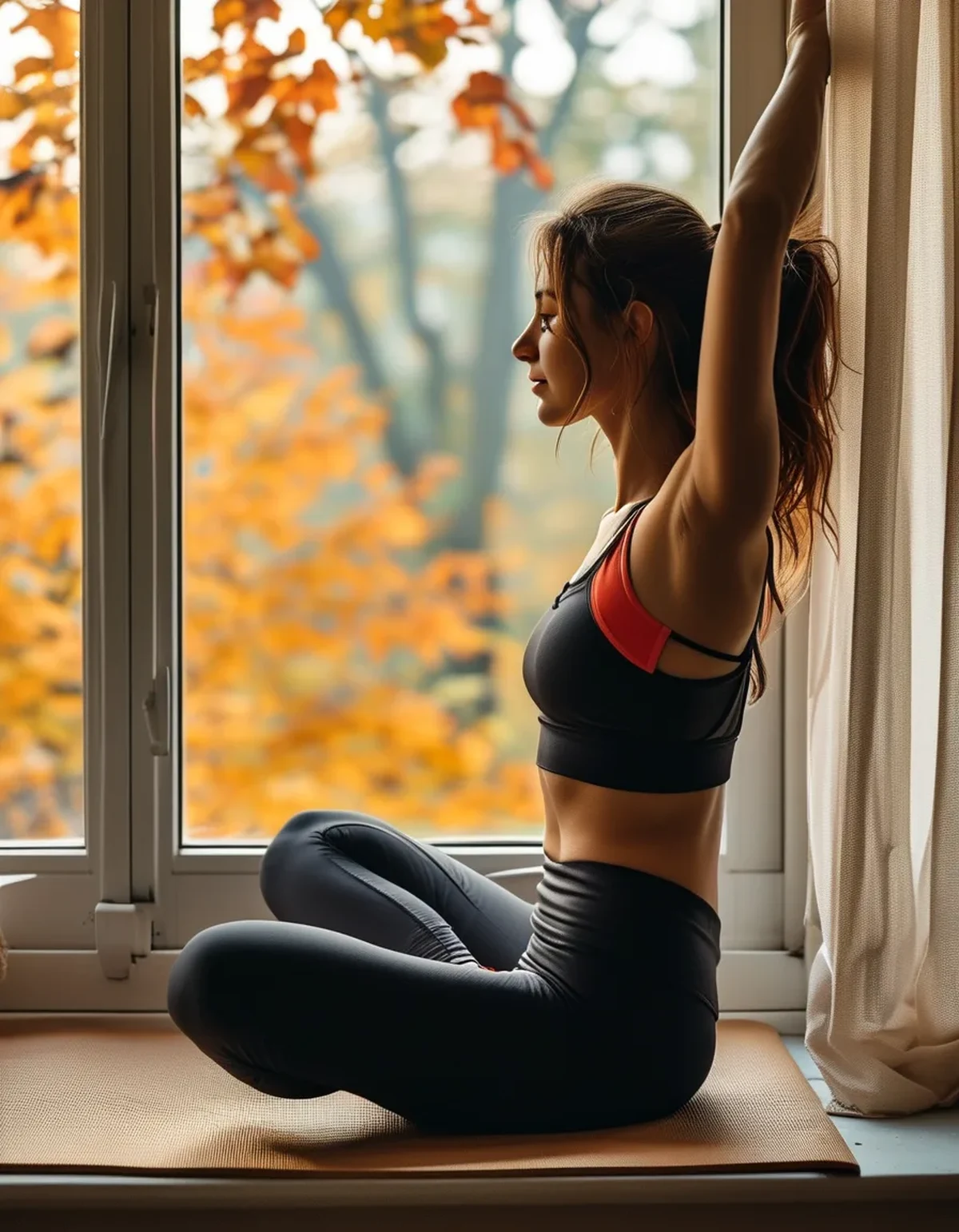
The ten-minute fix that actually works
The principle: raise tissue temperature first, then stretch. Never the reverse.
Stretching cold tissue is less effective and less comfortable, and it provides no injury-prevention benefit that a proper warm-up does not provide better.
Minutes 1–5: raise the temperature. Anything that gets blood moving. Marching in place, arm circles, easy squats, walking up and down stairs, a brisk walk around the block. You are looking for the point where you feel warm, not where you feel worked — five minutes is usually enough, and it can be less if you are already up and moving.
A hot shower before stretching genuinely helps for the same reason, and it is a legitimate substitute if you are short on time.
Minutes 5–8: dynamic range work. Controlled movement through range rather than static holds. Leg swings, hip circles, cat-cow, shoulder rolls, walking lunges. This is where the range actually comes back — dynamic work at a warm temperature restores most of what the cold took away.
Minutes 8–10: static holds, if you want them. Now the static stretching is productive. Thirty seconds per position, in the two or three places that genuinely need it.
What this changes: most people who feel dramatically stiffer in autumn find that eighty percent of the difference disappears after the first five minutes. The remaining twenty percent is the real change, and that is the part worth addressing with consistent work.
Myth vs Fact: cold weather and flexibility
Myth: You lose flexibility over the winter and have to rebuild it in spring. Fact: measured flexibility at equal tissue temperature is fairly stable. What changes is your warm-state access to it and, genuinely, your daily movement. The person who feels stiff all winter is usually moving less, not losing tissue length.
Myth: Stretching a cold muscle causes injury. Fact: gentle static stretching of cold tissue is not dangerous — it is just less effective and less comfortable. Aggressive, forceful stretching of cold tissue is a different matter and is worth avoiding. The reason to warm up first is effectiveness, not primarily safety.
Myth: You need to stretch longer in cold weather. Fact: you need to warm up longer. Adding thirty seconds to each hold on cold tissue accomplishes far less than adding five minutes of movement beforehand.
Myth: Feeling stiff means you are tight. Fact: the sensation of tightness is generated by the nervous system and correlates only loosely with actual tissue length. A muscle can feel tight because it is weak, fatigued, or under-recovered — and in those cases stretching provides temporary relief without addressing anything.
Myth: Warm rooms make you more flexible long-term. Fact: heat improves range in the moment. Whether hot environments produce greater lasting adaptation than the same work in a normal room is not well established.
FAQ: Cold Weather Flexibility Questions, Answered
Should I stretch before or after my workout in cool weather?
After, for static stretching — tissue is warmest then and the work is most productive. Before your workout, do dynamic movement instead.
Is it worth stretching first thing in the morning at all?
Only if you move for a few minutes first. Rolling out of bed straight into a hamstring stretch on a cold morning is the least productive version of the practice.
Why do my calves feel worse than anything else?
They are the furthest from your core, they get the least peripheral blood flow in cool conditions, and footwear changes in autumn — from flat sandals to shoes with a heel drop — alter their working length at the same time.
How long before this evens out for the season?
Most people adapt within two to three weeks as circulation and habits adjust. Persistent stiffness beyond that is usually about sitting time and reduced daily movement rather than temperature.
TL;DR: Cold tissue is genuinely stiffer, and three behavior changes stack on top of it.
- Muscle is viscoelastic — the same stretch produces less range at lower tissue temperature. That is physics, not perception.
- Morning is worst because you have been still, in a cooler room, with reduced peripheral circulation.
- Autumn quietly removes daily movement and adds sitting time. That is the part that actually matters.
- Some of it is clothing. A hoodie and long pants restrict range in ways a tank and shorts do not.
- Warm up five minutes before stretching, then do dynamic work, then static holds. Reversing the order wastes the session.
- Feeling tight is not the same as being short. Weak and fatigued muscles feel tight too, and stretching only masks that.
Tomorrow morning, walk around for five minutes before you stretch anything. Most of the range you think you lost will be back.
Keep Reading
This article is for general informational and styling purposes only. Fit, sizing, and product availability may vary.