Should You Stretch on Rest Days? Here's What Actually Helps Recovery
Quick Answer: Light, gentle stretching on rest days can support recovery by improving blood flow and reducing stiffness — but deep, intense stretching on very sore muscles can actually add micro-stress to already-fatigued tissue. Keep rest-day stretching to about 60-70% of your normal intensity.
You’ve heard both ‘always stretch when sore’ and ‘never stretch when sore’ — and both come from real experience, just describing different intensities of stretching.

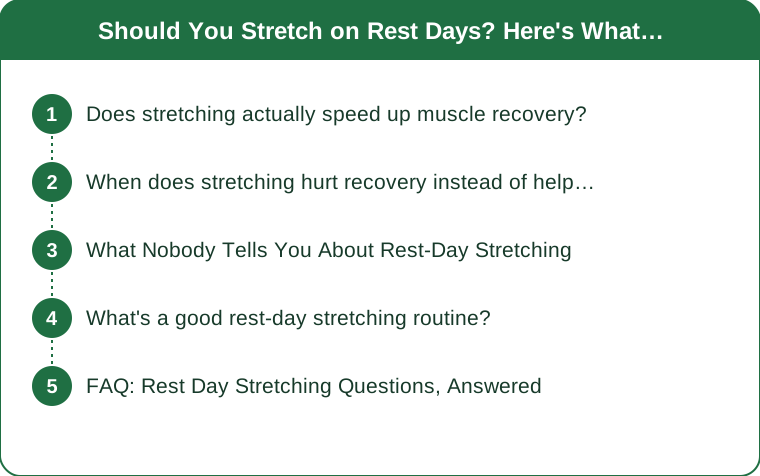
Does stretching actually speed up muscle recovery?
Gentle stretching increases blood flow to the area, which can help clear some metabolic byproducts and deliver nutrients faster than complete stillness — but the effect is modest, not dramatic. It’s a supporting factor, not a recovery cure.
What it reliably does help with is perceived stiffness — most people report feeling looser and less tight after gentle rest-day movement, even if the underlying muscle repair timeline is roughly the same either way.
When does stretching hurt recovery instead of helping?
When muscles are in the acute soreness window (typically 24-48 hours post-workout) and already dealing with micro-tears, aggressive deep stretching — holding to the point of real discomfort — adds mechanical stress to tissue that’s mid-repair.
This is different from gentle range-of-motion movement, which stays well below the pain threshold. The line is intensity, not whether you stretch at all.

What Nobody Tells You About Rest-Day Stretching
Most flexibility advice treats ‘stretching’ as one activity, but rest-day stretching should look noticeably different from a dedicated flexibility session — shorter holds (15-20 seconds vs. 30-60), lower intensity, and no pushing toward a new range-of-motion personal best.
The goal on a rest day isn’t progress, it’s maintenance and circulation — trying to make gains on a recovery day undermines the actual point of resting.
What’s a good rest-day stretching routine?
5-10 minutes total: gentle hip flexor stretch, hamstring stretch, chest opener, and a spinal twist, each held 15-20 seconds per side at about 60-70% of your normal stretch intensity.
Pair it with light walking or easy movement beforehand — cold muscles stretched aggressively, even gently, are more prone to strain than muscles with a little blood flow already going.
FAQ: Rest Day Stretching Questions, Answered
Is it better to stretch or do nothing on a rest day?
Gentle stretching or light movement (walking, easy yoga) generally beats total inactivity for reducing next-day stiffness, but neither is mandatory — listen to how sore you actually are.
Should I stretch before or after a rest-day walk?
After is better — a few minutes of easy walking first increases blood flow, making the stretch more effective and lower-risk.
How do I know if I’m stretching too intensely on a rest day?
If you feel sharp discomfort, or the area feels more sore the next day rather than less, you pushed past the gentle-maintenance zone.
TL;DR:
- Gentle rest-day stretching can support recovery; aggressive stretching on sore muscles can add stress
- Keep holds shorter (15-20 seconds) and intensity around 60-70% of a normal session
- Warm up with light movement before stretching, even on a rest day
- The goal is maintenance and circulation, not flexibility gains
If a stretch feels like effort rather than relief on a rest day, you’re pushing too hard for the day you’re in.
Keep Reading
This article is for general informational and styling purposes only. Fit, sizing, and product availability may vary.