Static Stretching Before a Workout: Helpful, Harmless, or Actually Counterproductive?
Quick Answer: Holding a static stretch for 30+ seconds right before strength or power-based exercise can slightly and temporarily reduce muscle output, so dynamic movement is generally the better pre-workout choice. Static stretching is still valuable — just better placed after your workout, or on its own as a separate flexibility session.
You’ve probably heard both “always stretch before you exercise” and “stretching before exercise hurts performance” from different corners of the internet. Both aren’t entirely wrong — it depends on which stretching and when.

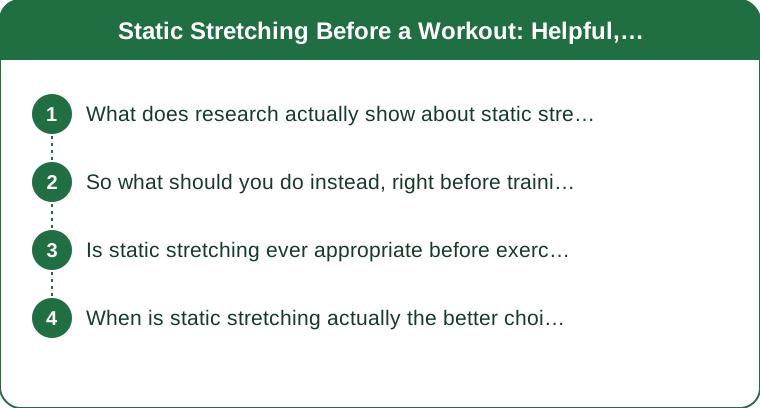
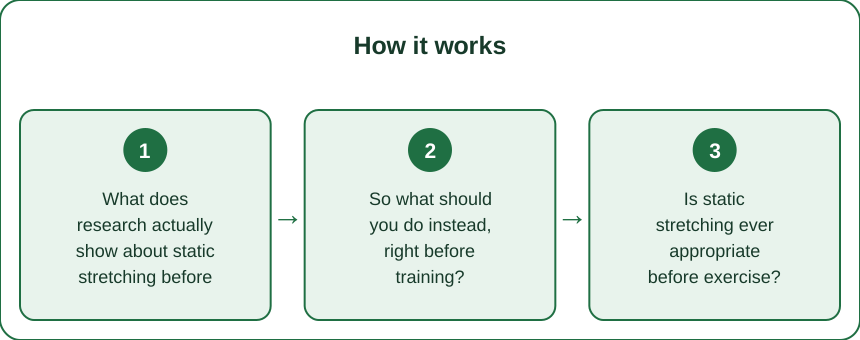
What does research actually show about static stretching before a workout?
Multiple studies on pre-exercise static stretching have found a short-term reduction in muscle strength and power output, sometimes lasting up to an hour after a long static hold, particularly for activities requiring maximal force like heavy lifting or sprinting. The effect is generally small but measurable, and it’s more pronounced with longer holds (45–90 seconds) than brief ones.
This doesn’t mean static stretching is bad — it means the timing matters more than most people realize.
So what should you do instead, right before training?
Dynamic stretching — controlled, moving stretches like leg swings, walking lunges, and arm circles — warms up the muscle and increases range of motion without the same temporary strength dip. It also raises heart rate and core temperature, which static holds don’t do much of.
A good pre-workout sequence is roughly 5 minutes of dynamic movement targeting the muscles you’re about to train, building in intensity toward what the workout will actually demand.

Is static stretching ever appropriate before exercise?
Yes, for lower-intensity activities like an easy walk or a beginner mobility class, the small strength reduction from static stretching barely matters, since you’re not chasing maximal output. It can also help if you have a specific tight area you want more range in before a movement that requires it (like deep squats), as long as you don’t hold it for more than 15–20 seconds in that context.
The main group who should be cautious is anyone training for strength, power, or sprint performance, where even a small, temporary dip matters.
When is static stretching actually the better choice?
After your workout, when muscles are warm and you’re not about to demand maximal force from them, is the ideal window for static stretching — this is when it’s most effective for improving long-term flexibility without any performance downside. A separate flexibility session on a rest day is another good option if long-term range of motion is your main goal.
Think of it as sequencing, not banning: dynamic before, static after.
TL;DR:
- Long static holds (30+ seconds) right before strength or power work can temporarily reduce output
- Dynamic stretching is the better pre-workout choice — it warms up muscle without the strength dip
- Static stretching is still valuable, just better placed after training or in a standalone session
- Low-intensity activity is the exception where pre-workout static stretching barely matters
Swap your pre-workout static holds for 5 minutes of dynamic movement, and save the deep stretching for when your workout is done — your flexibility gains don’t disappear, they just move to a better slot.
Keep Reading
This article is for general informational and styling purposes only. Fit, sizing, and product availability may vary.