Why You Are Stiffest First Thing in the Morning (and What Actually Loosens It)
Quick Answer: Morning stiffness is mostly three overnight facts: seven motionless hours let fluid pool in tissues and drain from moving joints, your spinal discs rehydrate and plump overnight (you literally wake taller and tighter), and your body temperature bottoms out near dawn - cool tissue is measurably stiffer tissue. It fades with movement because motion redistributes the fluid and warms everything back up. The fix is a six-minute sequence that starts in bed, and the red flag is stiffness lasting past 30 to 60 minutes with joint swelling - that pattern deserves a doctor, not a stretching routine.
The alarm goes off, you swing your legs out, and the first walk to the bathroom is performed by someone decades older than the person who went to bed. By the second coffee you are fine, so you keep not asking the question. The mechanism is genuinely interesting - and the ten-minute version of the fix is worth stealing even on the days you feel fine.


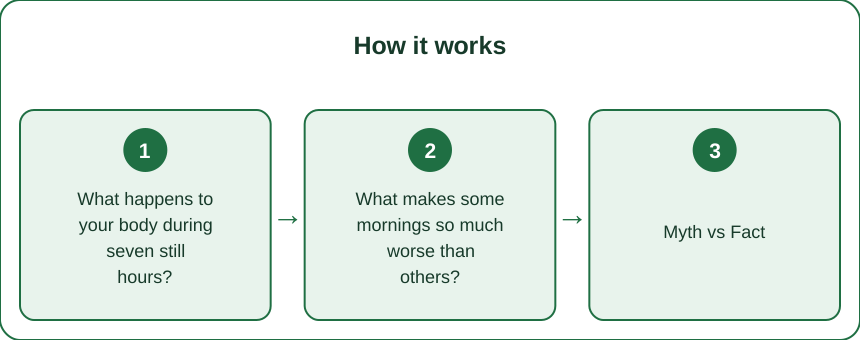
What happens to your body during seven still hours?
Three slow processes that all point the same direction.
Fluid stops circulating on schedule. Your joints and soft tissues rely on movement to pump fluid around - cartilage in particular has no blood supply and feeds by being squeezed and released like a sponge. Lying still for hours means synovial fluid thins out where it is needed and interstitial fluid pools where gravity and position put it. The first movements of the day are literally re-lubricating: awkward at first, better with every rep - which is exactly how it feels.
Your discs plump up overnight. The spine’s discs are water cushions that compress and lose fluid through every upright day, then rehydrate and expand overnight - you wake measurably taller than you went to bed, by up to a couple of centimeters. Fully inflated discs make the spine tauter and less bendy, which is why toe-touches at 7am feel impossible for the same back that folds easily at 7pm - and why aggressive spine bending in the first waking hour is the one stretch worth actually postponing.
You are at your coldest. Core temperature bottoms out in the pre-dawn hours as part of the circadian rhythm, and muscle and connective tissue are mechanically stiffer when cool - the same physics as cold taffy. An air-conditioned August bedroom, ironically, recreates a January morning: the cold sleeper wakes stiffer than the warm one in the same body.
Plus whatever yesterday left behind. A hard workout’s repair inflammation, a long car ride’s fixed posture, dehydration from a sweaty day, or the couch slump of a late evening all get compounded by the still hours. Morning stiffness is partly last night’s stillness and partly yesterday’s invoice, delivered together at 6:45am.
What makes some mornings so much worse than others?
The dials you can actually see, ranked by how much they move the needle.
Yesterday’s training - especially the eccentric kind. Downhill hiking, heavy lowering phases, a first-in-a-while class: the muscle-repair process peaks 24 to 48 hours later and its inflammation reads as deep stiffness that stillness concentrates. This one is benign and even productive - but it stacks with everything below.
Sleep position held too long. Side-sleeping with the top knee dropped twists the low back for hours; stomach sleeping cranks the neck to one side all night; the fetal curl holds hips flexed until they believe that is their length. No position is wrong - the problem is any position held rigidly, which is why worse-than-usual mornings often follow deepest-sleep nights, and why the pillow-between-the-knees trick genuinely earns its reputation for side sleepers.
Evening dehydration. Tissue hydration affects tissue glide, and a sweaty August day followed by wine and no water is the classic setup for a creaky dawn. The boring fix - a real glass of water in the evening - shows up in the morning more reliably than almost anything sold for stiffness.
The cold-room factor. Blasting AC all night keeps sleep deep but tissue cool. The compromise that works: keep the room cool for sleep quality, but let the warm shower or the movement sequence handle rewarming before you demand range from anything.
Age shifts the baseline honestly. Tissue elasticity declines gradually and recovery runs slower, so the same night produces more morning stiffness at 50 than at 25 - a change in degree, not a disease. What age does not explain: stiffness that lasts past the first hour, joint swelling, or symmetrical small-joint tightness in the hands and feet. Prolonged true morning stiffness - especially beyond 30 to 60 minutes with swollen or tender joints - is a known flag for inflammatory conditions and deserves a medical conversation rather than a longer stretching routine. This is general information, not medical advice.

Myth vs Fact: Morning Stiffness
Myth: Stretching cold muscles first thing will injure you. Fact: Gentle range-of-motion movement in the morning is safe and exactly what the situation calls for - the caution applies to aggressive static stretching and loaded end-range positions, which cool, disc-plump tissue genuinely handles worse. Easy circles yes, ballistic toe-touch crusades no.
Myth: Waking up stiff means something is wrong with you. Fact: Transient morning stiffness that eases with movement inside 15 to 30 minutes is a normal feature of human overnight physiology at every age past about 30. The pattern that means see someone is different: lasting an hour, involving swollen joints, or worsening over weeks.
Myth: The mattress is always the culprit. Fact: Sometimes - a mattress that has lost support shows up as position-specific back stiffness - but the mattress gets blamed for what dehydration, yesterday’s workout, a cold room, and a rigid sleep position did. Change the free variables for two weeks before spending a thousand dollars on the guess.
Myth: Static stretching is the best morning medicine. Fact: Movement beats holds in the first waking minutes - flowing, repeated, gentle range (cat-cows, circles, easy squats) redistributes fluid and warms tissue faster than parking in a stretch. Long holds are wonderful later in the day, when tissue is warm and discs have settled.
Myth: A stiff morning predicts a stiff day. Fact: The correlation mostly runs through behavior: the stiff waker who moves gently and early is loose by 9am; the one who folds straight into a car and a desk chair carries it to noon. The first thirty minutes are the lever - which is the entire case for the sequence below.
The six-minute morning unstiffening sequence
Built to start before your feet touch the floor, ordered from gentlest to most upright.
Still in bed - two minutes. On your back: knees to chest, gentle rock side to side, ten slow breaths. Then knees bent, feet flat, and let both knees fall slowly side to side - ten easy reps, no forcing, letting the low back rotate in its smallest range. Ankle circles and toe points while you are there - calves and feet run the first walk of the day and appreciate the memo. This bed phase is the one that makes the bathroom walk feel ten years younger.
Bedside - two minutes. Standing: ten slow shoulder rolls, then arms overhead for a tall reach with a gentle side lean each way. Ten easy hip circles each direction, hands on hips. Then five slow half-squats to a comfortable depth, letting knees and hips re-lubricate under bodyweight - not exercise, just motion with a little load.
Kitchen counter - two minutes, while the coffee brews. Hands on the counter, walk feet back, and let the spine lengthen into a gentle half-fold - an easy hamstring and back opener that respects the morning discs. Then a calf stretch each side with the ball of the foot on the baseboard, and finish with ten cat-cows standing, hands still on the counter, rounding and arching through a lazy comfortable range. By the time the mug is full, so is your range.
The two accelerants: a warm shower before or after the sequence rewarms tissue faster than movement alone - on the worst mornings, shower first, then move. And the day’s first ten-minute walk, even to the corner and back, finishes what the sequence starts; in late August the early walk is also the day’s most pleasant outdoor window, before the heat arrives.
And the prevention list runs the night before: a glass of water with dinner and another in the evening, two minutes of the same gentle movements before bed to pay down the day’s posture, the pillow between the knees for side sleepers, and the AC set cool-not-arctic. Steal the whole routine even on good mornings - it is six minutes, and the version of you that gets out of the car at work has opinions about whether you did.
FAQ: Morning Stiffness Questions, Answered
Why am I so stiff when I wake up but fine an hour later?
Overnight stillness lets joint and tissue fluid pool and thin out, spinal discs rehydrate and tighten the spine, and core temperature bottoms out near dawn - all of which resolve with movement, which redistributes fluid and rewarms tissue. Easing within 15 to 30 minutes of getting up is the signature of this normal, mechanical kind of stiffness.
What is the best way to loosen up in the morning?
Gentle repeated movement beats deep static stretching: knee rocks and side-to-side drops in bed, shoulder and hip circles bedside, half-squats, and counter-supported folds while the coffee brews - about six minutes total. A warm shower accelerates it, and a short walk finishes the job. Save long stretch holds for later in the day when tissue is warm.
Is it bad to stretch right after waking up?
Gentle range-of-motion work is safe and helpful. What deserves caution in the first waking hour is aggressive end-range spine bending and loaded stretching - overnight-rehydrated discs and cool tissue tolerate those worst. Move easily first; earn the deep positions after breakfast.
When is morning stiffness a sign of something more?
When it regularly lasts beyond 30 to 60 minutes, involves visibly swollen, warm, or tender joints - especially symmetrically in hands and feet - wakes you at night, or worsens across weeks. That pattern is associated with inflammatory conditions and warrants a medical evaluation rather than a better stretching routine. This is general information, not medical advice.
TL;DR:
- Overnight stillness pools fluid, discs re-plump (you wake taller and tighter), and dawn is your coldest hour - stiffness is the sum.
- Yesterday matters too: eccentric workouts, dehydration, cold AC, and one rigid sleep position all compound it.
- Movement beats stretching first thing: the six-minute bed-bedside-counter sequence, then a warm shower and a short walk.
- Postpone aggressive spine bending an hour; the discs have not settled yet.
- Stiffness past 30 to 60 minutes with swollen joints is a doctor conversation, not a flexibility project.
The first ten steps of the day were never a verdict on your body - just a report on seven motionless hours. Answer it with six minutes of motion and the rest of the day stops hearing about it.
Keep Reading
This article is for general informational and styling purposes only. Fit, sizing, and product availability may vary.