Flexibility Myths vs Facts: What Actually Improves Your Range (and What Doesn't)
Flexibility is buried under myths — the bouncing, the no-pain-no-gain stretching, the belief that some people just ‘can’t’ get flexible. Sorting fact from fiction changes your results. The guide: the common myths debunked, what actually improves your range and the realistic approach that beats the folklore.


The Flexibility Myths Debunked
The folklore that fails: the the-bouncing-myth (the ballistic-bouncing being counterproductive-and-risky — the the-no-bouncing; the the-controlled-over-bouncing), the the-no-pain-no-gain-myth (the painful-stretching being harmful, not-effective — the the-gentle-not-agony; the the-stretch-shouldn’t-hurt), the the-you-can’t-get-flexible-myth (the most-people-can-improve with consistent-work — the the-trainable; the the-not-fixed; the the-how-to-improve chapter’s hope), the the-stretch-before-exercise-myth (the static-stretching-before being less-ideal than dynamic-warm-up — the the-warm-up-vs-stretch; the the-timing-matters), the the-more-is-always-better-myth (the over-stretching risks, especially-for-hypermobile from the hypermobile-caution chapter — the the-not-always-more; the the-hypermobile-caution), and the reframe (the flexibility as a myth-ridden topic clarified-by-facts — the debunk-the-folklore; the the-science-over-myth).

The What-Actually-Works Science
What genuinely improves range: the the-consistent-stretching (the regular-stretching-over-time being the real-driver from the daily-routine chapter — the the-consistency-wins; the the-regular-practice), the the-hold-and-relax (the gentle, held-stretches with relaxation — the the-effective-technique; the the-controlled-hold), the the-warm-tissue-stretches-better (the stretch-when-warm — the the-warm-up-first; the the-warm-tissue), the the-dynamic-for-warm-up (the dynamic-stretching before-activity — the the-warm-up-role; the the-movement-prep), the the-strength-through-range (the strength-training-through-full-range building usable-flexibility — the the-strength-and-flexibility; the the-loaded-mobility; the the-usable-range), the the-consistency-over-intensity (the daily-gentle over occasional-aggressive — the the-little-and-often; the the-sustainable), the the-target-your-tight-spots (the address-your-limitations like hips-and-desk-tightness from the hip-mobility and desk-worker chapters — the the-specific-work; the the-your-tight-areas), and the the-patience (the flexibility-improving-over-weeks-and-months — the the-gradual-gains; the the-give-it-time).
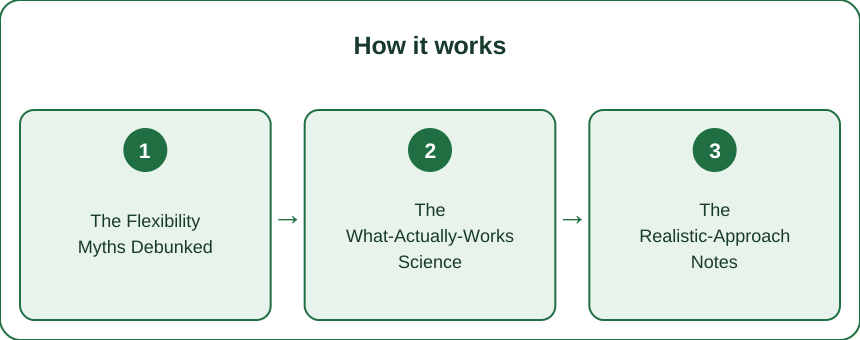
The Realistic-Approach Notes
The sensible flexibility practice: the the-consistent-routine (the regular-stretching-habit from the daily-routine chapter — the the-consistency; the the-habit), the the-gentle-and-controlled (the no-bouncing, no-pain approach — the the-safe-stretching; the the-gentle-technique), the the-warm-up-first (the stretch-warm — the the-warm-tissue; the the-prep-first), the the-target-your-needs (the your-tight-spots addressed — the the-personal-focus; the the-your-limitations), the the-combine-with-strength (the mobility-plus-strength for usable-range — the the-strength-and-flexibility; the the-functional-approach), the the-hypermobile-caution (the don’t-over-stretch if-hypermobile from the hypermobile-caution chapter — the the-know-your-body; the the-stability-over-more-range), the the-realistic-expectations (the gradual-gains over quick-fixes — the the-patience; the the-months-not-days), and the frame (flexibility improved through debunking-myths, the what-works-science and the realistic-approach — the consistent, gentle, warm and strength-supported stretching that actually works; the folklore, replaced by facts). Stretch consistently and gently when warm, add strength-through-range, be patient: the flexibility, actually improved.
Flexibility is buried under myths — bouncing, no-pain-no-gain, ‘some people just can’t.’ The facts: don’t bounce (control it), stretching shouldn’t hurt, and most people CAN improve with consistency. What actually works: regular gentle held-stretches on warm tissue, dynamic stretching for warm-ups, and strength training through full range for usable flexibility. Target your tight spots, be patient (weeks to months), and if you’re hypermobile, prioritize stability over more range.
Keep Reading
This article is for general informational and styling purposes only. Fit, sizing, and product availability may vary.