The 15-Minute Full-Body Flexibility Routine: Every Major Area, Most Days
Flexibility routines fail from ambition — the 45-minute program done twice, ever — while the science favors the opposite: short, frequent, complete. The 15-minute full-body route: eight positions covering every major area, dosed by breath, most days.
The Sequence
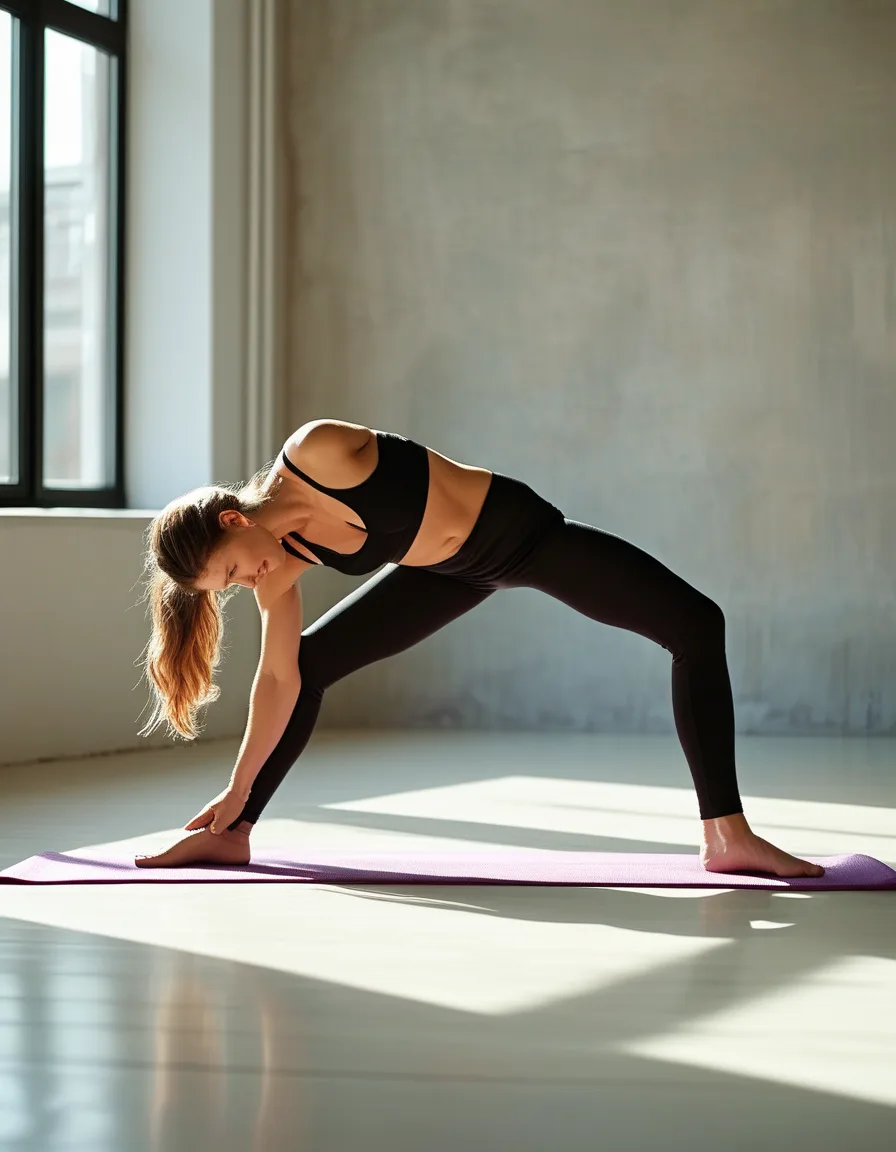
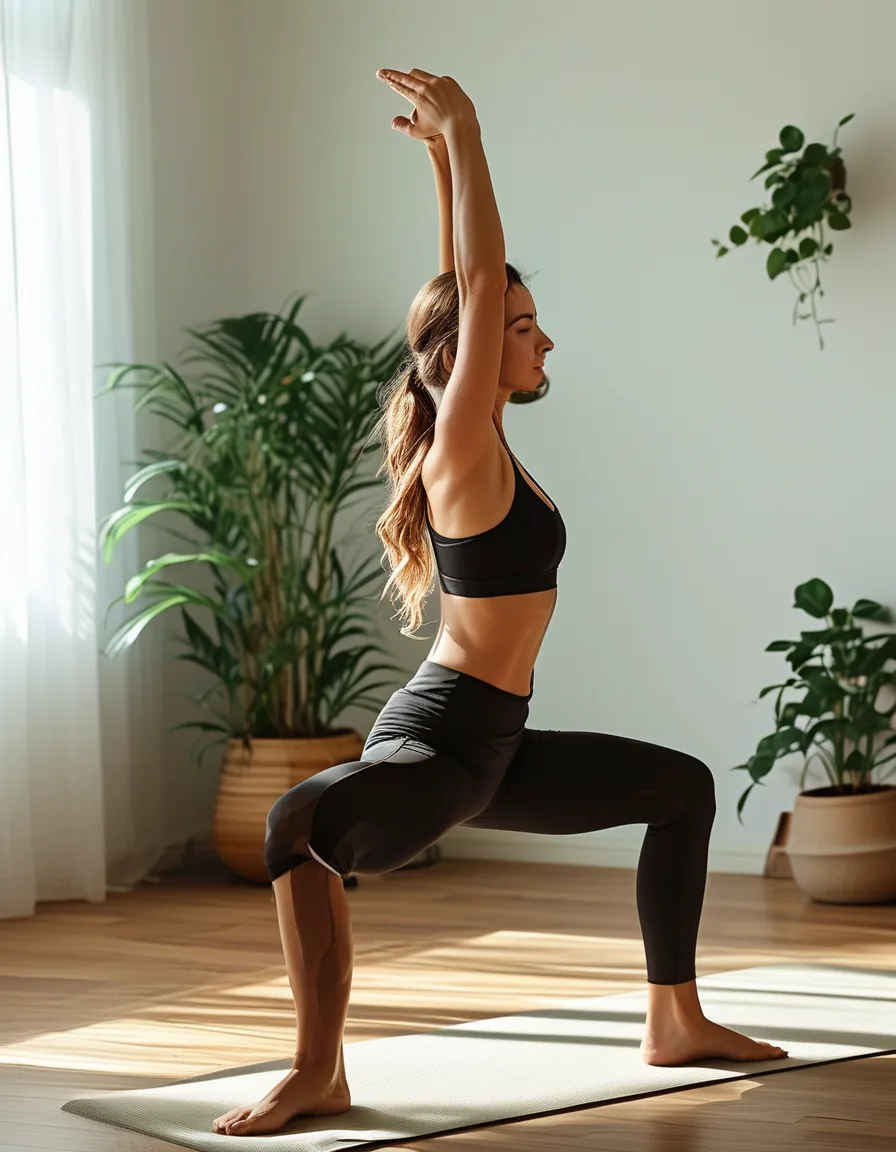
The head-to-toe route (60-90 seconds each): the neck-and-shoulder opener (ear-to-shoulder holds and the cross-body arm — the desk’s first invoices), the doorway chest stretch (the posture chapter’s classic — the front-body opening that everything hunched needs), the cat-cow spine minute (movement, not hold — the segment that warms the route), the seated or standing hamstring fold (knees soft, hinge honest — the tolerance-building staple), the hip-flexor kneeling lunge (the highest-value hold in the routine — sitting’s antidote, both sides, no skipping), the figure-four glute stretch (lying or seated — the outer-hip release), the quad stand-and-hold (the balance bonus built in), and the calf wall stretch (straight and bent knee — the ankle-mobility foundation everything stands on).
The Dosing Rules
How to hold: the breath-counted holds (six-to-ten slow breaths per position — the exhale-deepening pattern from the yin chapter; counting breaths beats watching clocks and builds the downshift in), the edge-minus-ten intensity (the comfortable-stretch sensation, never the wince — the tolerance science rewards patience over aggression), the both-sides equality (the tighter side gets the same count, noted not punished — the asymmetry is data for the log), and the daily-most-days honesty (five sessions weekly at 15 minutes beats any weekend marathon — frequency is the entire mechanism; the routine attached to an anchor — post-workout, pre-shower, the evening wind-down — survives; the scheduled-grandly one doesn’t).
The Customization Layer
Making it yours: the emphasis shift (the runner doubles the calf-and-hip time, the desk worker doubles chest-and-hip-flexor, the lifter adds the lat-and-ankle wings — the route flexes to the life), the equipment upgrades (the band-assisted versions from the band chapter, the wall and the doorway as free props — assistance deepens what effort can’t), the contract-relax accelerator (the PNF cycles on the hamstring and hip-flexor holds — the technique that moves stubborn needles, twice weekly), and the warm-versus-cold note (the routine post-shower or post-walk goes deeper than the cold-morning version — the same 15 minutes buys more on warm tissue; schedule accordingly).
The Progress System
Keeping it honest: the monthly photo protocol (the same three stretches photographed — the fold depth, the lunge sink, the reach; the month-view shows what the day-view hides, per the adult-flexibility chapter), the functional markers (the toe-touch morning test, the deep-squat hangout comfort, the reach-behind-back gap — the life-measures that matter more than aesthetics), the plateau protocol (stuck ranges get the strength-through-range treatment — the loaded stretches that unlock what holding can’t), and the payoff framing (the routine’s real products are the unstiff mornings, the deeper squats and the nervous-system downshift — flexibility was always three benefits wearing one name; fifteen minutes collects them all). Eight positions, six breaths each, most days: the whole flexible life.
Eight positions head to toe, six breaths each, edge minus ten, photograph monthly. The 15-minute route beats every abandoned program — frequent, complete and attached to your evening.
Keep Reading
This article is for general informational and styling purposes only. Fit, sizing, and product availability may vary.