How to Improve Your Flexibility Faster
Want to see flexibility gains sooner rather than later? While flexibility genuinely takes time and consistency to develop, a few smart strategies can speed up your progress safely — helping you move more freely and comfortably faster. There are no magic overnight fixes, but there are ways to make your stretching more effective. Here’s how to improve your flexibility faster, without pushing into injury.

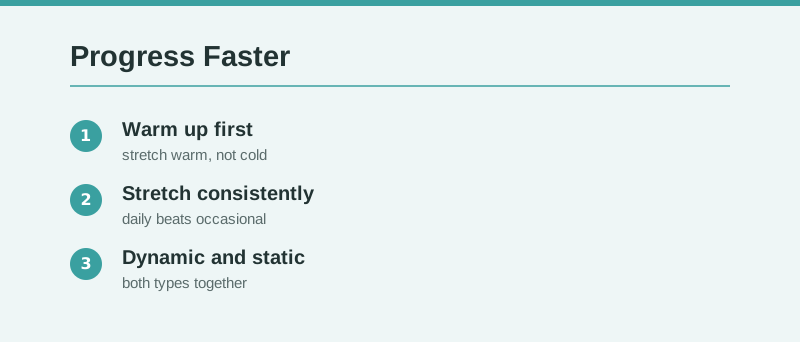
Warm Up Before You Stretch
Stretching cold, stiff muscles is both less effective and riskier than stretching warm ones. A few minutes of light movement beforehand — a brisk walk, some gentle mobility, or stretching after a warm shower — raises your muscle temperature and lets you stretch deeper, more safely, and more productively. Warming up first is one of the simplest ways to get more out of every stretch and speed up your progress. Never stretch deeply from cold.

Stretch Consistently
Frequency is genuinely the biggest driver of flexibility gains. Short, daily stretching sessions beat occasional long ones every time — your body adapts to regular, repeated stretching far faster than to sporadic effort. Stretching a little every day, even just five or ten minutes, produces noticeable improvement surprisingly quickly. If you want faster results, consistency is your most powerful tool, so build stretching into your daily routine and keep it up.

Combine Dynamic and Static Stretching
Using both types of stretching accelerates your progress. Dynamic stretches (controlled, moving stretches) are great before activity to prepare your muscles, while static stretches (sustained holds) after activity build lasting flexibility. Incorporating both trains your flexibility more completely than relying on one alone. This combined approach means you’re improving your range of motion from multiple angles, which speeds up your overall progress toward being more supple and mobile.
Hold Stretches Long Enough
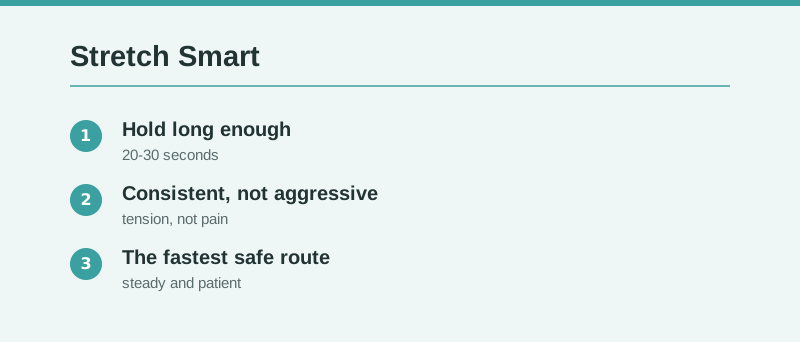
To actually improve flexibility, static stretches need to be held long enough for the muscle to release — generally around 20 to 30 seconds or more, breathing deeply throughout. Quick, bouncy stretches held for just a couple of seconds don’t produce the same gains. Giving each stretch enough time, and relaxing further into it with each exhale, is what genuinely lengthens the muscle over time. Patience within each stretch pays off in faster overall progress.
Be Consistent, Not Aggressive
Here’s the crucial caveat: faster does not mean forcing. Pushing aggressively into painful stretches causes your muscles to tense and can lead to injury, which sets your progress back rather than speeding it up. Work within a comfortable range of tension (never sharp pain), and let your flexibility expand naturally through consistent, patient practice. Consistency, not aggression, is genuinely the fastest safe route to a more flexible body. Steady, gentle, regular stretching wins.
Improving your flexibility faster means warming up before you stretch, stretching consistently, combining dynamic and static stretches, holding stretches long enough, and staying consistent rather than aggressive. Smart, regular, patient practice is the fastest safe route to a more supple, mobile body. There’s no overnight fix, but with these strategies you’ll see genuine progress sooner — and enjoy moving more freely.
Keep Reading
This article is for general informational and styling purposes only. Fit, sizing, and product availability may vary.