Stretch AM or PM? Matching Flexibility Work to Your Body's Clock
Quick Answer: Both times work — they just do different jobs. Morning stretching should be gentle and dynamic to wake up stiff joints, while evening stretching can go deeper with longer static holds because your muscles are already warm. If you can only pick one, consistency matters more than the clock.
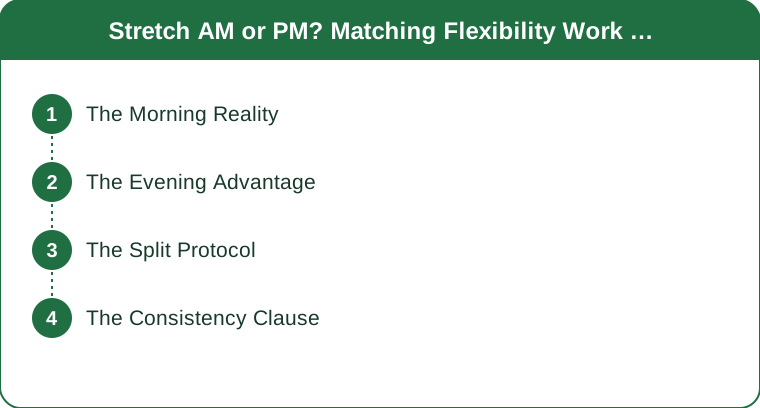
The stretching-time debate has a pleasing answer: both, for different jobs. Morning bodies are stiff and want gentle waking; evening bodies are warm and want deeper work. Match the stretch to the clock, and both sessions pay off in different currencies.

Why does your body feel stiffer in the morning?
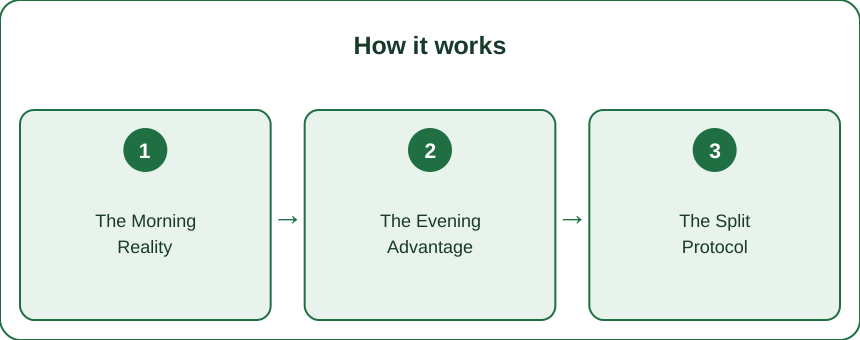
Overnight, the discs in your spine rehydrate and your muscles cool down, which is why morning bodies are legitimately stiffer than evening ones — the toe-touch at 7am versus the toe-touch at 7pm is basically a different sport. This isn’t a sign anything’s wrong; it’s a completely normal overnight process reversing itself as you get moving.
What kind of stretching should you do in the morning?
Morning stretching should be dynamic and gentle, not a deep static hold. Think:
- Arm circles and shoulder rolls to loosen the upper body.
- Leg swings, forward and side-to-side, to wake up the hips.
- Cat-cows to move the spine through its full range gently.
The goal here is waking, not lengthening. Save the deep, long holds for later in the day when your tissue is warmer and more cooperative — pushing hard into a cold stretch first thing is a good way to feel worse, not better.
Why is evening the better time for deep stretching?
Warm evening tissue stretches deeper and safer than cold morning tissue. This is when longer holds — think 30-60 seconds per stretch — actually move flexibility forward, rather than just maintaining what you’ve already got.
Evening sessions do double duty, too: long, slow exhales into a hip stretch or hamstring hold function as nervous-system homework as much as physical training, which is part of why an evening stretch routine often doubles as a wind-down ritual before bed.

What does a good AM/PM stretching split look like?
A simple split that covers both goals:
- AM: 5 minutes dynamic. Joints moving through their range, blood flowing, nothing held for long.
- PM: 10 minutes static. Hips, hamstrings, and chest — the “desk trinity” that tightens from sitting — each held long and breathed through.
Same body, two appointments, complementary returns. Neither session is trying to do the other’s job, which is exactly why the split works better than picking one and skipping the other.
Does timing matter more than consistency?
Not really — frequency wins. Flexibility responds to how often you show up far more than it responds to which hour you choose. Ten daily minutes beats one heroic 45-minute session every Sunday, no matter what the clock says. The best stretching time is, eternally, the one your actual schedule will honor week after week.
Myth vs Fact: Stretching Timing
Myth: You should never stretch first thing in the morning. Fact: Gentle, dynamic morning stretching is fine and often helpful — the key word is gentle. It’s aggressive, deep static holds on cold muscles that tend to feel counterproductive, not movement in general.
Myth: Evening stretching before bed will keep you wired. Fact: The opposite is usually true. Slow, held stretches paired with deep breathing tend to calm the nervous system, which is why evening stretch routines are commonly used as a wind-down habit.
Myth: If you missed your “ideal” stretching time, the session isn’t worth doing. Fact: Any consistent stretching, morning or evening, beats a perfectly timed session you only do once. Showing up regularly matters more than hitting a specific hour.
Mini FAQ
Is it better to stretch before or after a workout?
Dynamic stretching (like leg swings and arm circles) works well as a pre-workout warm-up, while deeper static holds are generally better saved for after a workout, when muscles are already warm. This mirrors the same morning-versus-evening logic — gentle first, deep later.
How long should a daily stretching routine be?
A combined 10-15 minutes a day — a short dynamic morning session plus a longer static evening session — is a reasonable, sustainable target for most people. Consistency over weeks matters more than the length of any single session.
Can stretching too much cause pain or injury?
Overstretching, especially forcing a deep hold on cold or already-sore muscles, can cause strain. If a stretch produces sharp pain rather than a mild pulling sensation, or if soreness persists, it’s worth easing off and checking in with a doctor or physical therapist rather than pushing through it.
TL;DR
- Morning: gentle, dynamic stretching (circles, swings, cat-cows) to wake up stiff joints.
- Evening: deeper static holds (30-60 seconds) since warm tissue stretches safer and further.
- A simple split — 5 minutes AM, 10 minutes PM — covers both goals without overcomplicating things.
- Evening stretching doubles as a nervous-system wind-down before bed.
- Consistency beats perfect timing — daily short sessions outperform occasional long ones.
- Sharp pain during stretching is a cue to ease off and check in with a professional.
Keep Reading
This article is for general informational and styling purposes only. Fit, sizing, and product availability may vary.