Stretching Myths: What Flexibility Science Actually Says
Stretching carries more folklore than any fitness practice — the mandatory pre-run toe-touches, the injury-prevention promises, the no-pain-no-gain holds. The science update: what stretching actually does, when each type belongs and the myths ready for retirement.

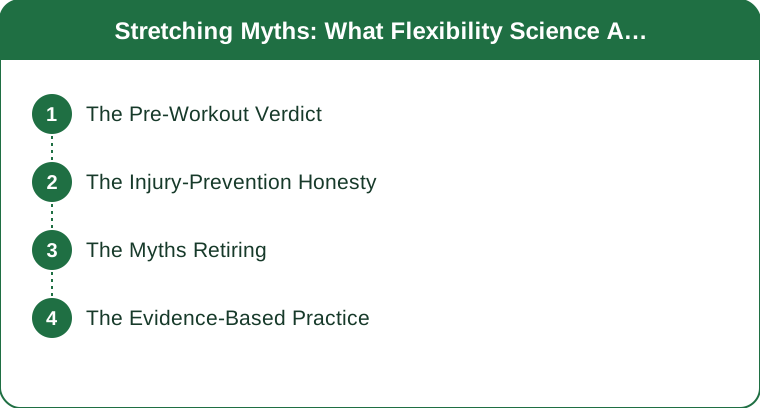
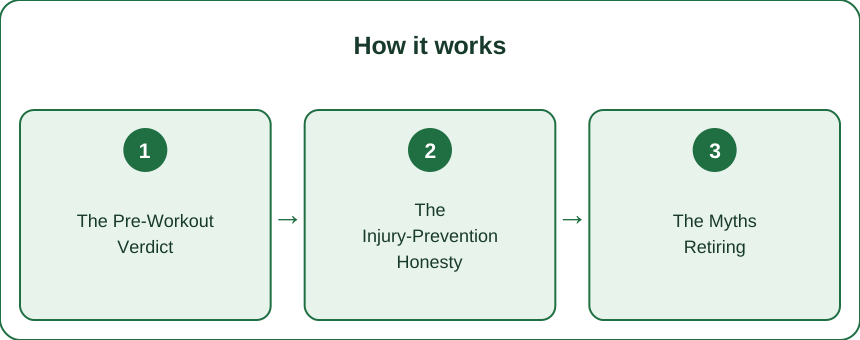
The Pre-Workout Verdict
The static-stretching update: the finding that changed warm-ups (long static holds immediately before power-and-strength work can temporarily reduce force output — the pre-lift toe-touch tradition mildly sabotages the lift; the effect is modest and real), the dynamic replacement (movement-based warm-ups — leg swings, lunges, arm circles — prepare tissue AND performance; the warm-up chapter’s standing doctrine), the nuance that survives (brief static stretches under 30 seconds barely matter either way, and sports needing range — dance, martial arts — legitimately stretch before; the rule serves lifters and sprinters most), and the placement answer (static stretching’s home is AFTER training or as its own session — warm tissue, no performance bill, better gains).
The Injury-Prevention Honesty
The uncomfortable evidence: stretching alone doesn’t prevent most injuries (the research on pre-exercise stretching and injury rates keeps disappointing — the folklore’s central promise doesn’t hold), what actually prevents (gradual load progression, strength through range, adequate warm-up and sleep — the boring pillars again; the strength-training-reduces-injuries evidence embarrasses the stretching evidence), the range-of-motion exception (sports REQUIRING range reward having it — the flexibility that prevents injury is the one your sport demands, built over months), and the reframe (stretch for range, comfort and the practice’s own value — the injury-prevention claim was always the weakest reason).

The Myths Retiring
The ceremony: ‘no pain no gain’ (pain triggers protective tension — the edge-minus-ten doctrine builds range faster than wincing; the yin chapter was right), ‘stretching lengthens muscles’ (the change is mostly stretch TOLERANCE — the nervous system permitting range it always had; the muscle rarely physically lengthens, which changes nothing practical and everything conceptual), ‘flexibility equals fitness’ (range is one quality — the hypermobile chapter’s population proves more isn’t better; range WITH strength is the target), and ‘daily long sessions required’ (frequency-over-duration wins — the five-minute daily beats the Sunday hour; the tissue adapts to regular signals).
The Evidence-Based Practice
What survives scrutiny: the after-training window (post-workout static stretching on warm tissue — the traditional slot, validated), the standalone session (the evening routine and the yin-style practice — where range genuinely builds; the contract-relax techniques from the band chapter as the accelerator), the dynamic-before doctrine (movement prep for movement — the swap that upgrades every warm-up), the strength-through-range integration (the loaded stretch tier — deep goblet squats and Romanian deadlifts building flexible STRENGTH; the modern consensus’s favorite child), and the enjoyment clause (stretching feels good and downshifts the nervous system — reasons enough without folklore’s promises; the practice survives its myths comfortably). Stretch smarter: after, often, without the wincing.
Dynamic before, static after, tolerance not length, strength through range. Stretching survives its mythology — the practice was always good; the promises just needed editing.
Keep Reading
This article is for general informational and styling purposes only. Fit, sizing, and product availability may vary.